
W9, W8-BEN, W8-BEN-E & FATCA Form 8938: The Complete Guide for Americans Abroad
Understanding your obligations under W9, W8-BEN, W8-BEN-E, and FATCA Form 8938 is essential for every U.S. citizen or green card holder living outside the United States. Since 2012, the IRS has dramatically expanded its international reporting requirements, and financial institutions worldwide — including Israeli banks — are now legally required to identify and report American account holders. Failing to comply can result in severe penalties. This guide explains each form, who must file, key thresholds, and how to stay fully compliant.
—
What Is FATCA and Why Does FATCA Form 8938 Matter?
The Foreign Account Tax Compliance Act (FATCA) was enacted to combat offshore tax evasion by U.S. persons. Under FATCA, foreign financial institutions (FFIs) must report information about accounts held by U.S. persons directly to the IRS or through their local tax authority under an intergovernmental agreement (IGA).
Form 8938, titled Statement of Specified Foreign Financial Assets, is the taxpayer-side disclosure that accompanies your annual U.S. tax return (Form 1040). It is filed directly with the IRS and is separate from the FBAR (FinCEN Form 114), which is filed with the Financial Crimes Enforcement Network (FinCEN).
Israel signed a FATCA intergovernmental agreement, meaning Israeli banks began transmitting account data to the Israeli Tax Authority, which then forwards it to the IRS. This process has been active since 2016. If you hold accounts in Israel or elsewhere outside the U.S., you are likely already in the IRS’s data stream.
—
FATCA Form 8938 Filing Thresholds and Key Rules
Unlike the FBAR, Form 8938 covers a broader range of assets — not just bank accounts. It includes stocks, bonds, options, financial derivatives, and interests in foreign entities held outside a financial account.
Filing Thresholds for Taxpayers Living Outside the U.S.
| Filing Status | Threshold at Year-End | Threshold at Any Point During Year |
|---|---|---|
| Single / Married Filing Separately | $200,000 | $300,000 |
| Married Filing Jointly | $400,000 | $600,000 |
Filing Thresholds for Taxpayers Living Inside the U.S.
| Filing Status | Threshold at Year-End | Threshold at Any Point During Year |
|---|---|---|
| Single / Married Filing Separately | $50,000 | $75,000 |
| Married Filing Jointly | $100,000 | $150,000 |
Key rules to remember:
- Form 8938 is attached to your annual tax return and due on the same date (typically April 15, with extensions).
- Assets are reported at their maximum fair market value during the year, not just the year-end balance.
- Filing Form 8938 does not replace your obligation to file the FBAR. Both may be required simultaneously.
- Penalties for failure to file can reach $10,000 per violation, with additional penalties for continued non-compliance after IRS notification.
- Unlike the FBAR, Form 8938 also captures financial derivatives such as options, warrants, and securities held outside a custodial account. A business owner must report the fair market value of their foreign company shares; an employee holding stock options in a foreign firm must also report them.
For a deeper comparison of FATCA and FBAR requirements, see our dedicated FATCA reporting guide.
—
Understanding Form W-9: Who Signs It and Why
Form W-9 (Request for Taxpayer Identification Number and Certification) is completed by U.S. persons — citizens, resident aliens, and certain U.S. entities — to certify their U.S. tax status and provide their Social Security Number (SSN) or Employer Identification Number (EIN).
Who Needs to Sign a W-9?
You will be asked to sign a W-9 when:
- Opening a bank account or investment portfolio in Israel or abroad.
- Receiving payments from a U.S. business as a contractor or vendor.
- Receiving dividends, interest, or proceeds from a broker where your U.S. status must be confirmed.
- Engaging with a partnership, trust, or financial institution that must verify account holder identity under FATCA.
By signing the W-9, you are certifying to the financial institution that you are a U.S. person subject to IRS reporting. The institution can then report the relevant account information to the IRS. If you have been asked for your SSN at a bank or investment house, you almost certainly signed a W-9 — or were asked to.
Important: Financial institutions are legally restricted from disclosing detailed information about these forms to clients due to regulatory limitations. If you are uncertain whether you have signed one, check whether the institution requested your SSN.
—
Understanding Form W-8BEN: For Non-U.S. Individuals
Form W-8BEN (Certificate of Foreign Status of Beneficial Owner for United States Tax Withholding and Reporting — Individuals) is the counterpart to the W-9. It is signed by non-U.S. individuals to certify their foreign status and claim any applicable treaty benefits.
Key Purposes of W-8BEN
- Establishes that the account holder is not a U.S. person and is therefore exempt from certain IRS reporting obligations.
- May claim reduced withholding tax rates under a bilateral tax treaty (for example, the U.S.-Israel Tax Treaty).
- Allows financial institutions to determine the correct withholding rate on U.S.-source income such as dividends, interest, and royalties.
A foreign individual who does not file a W-8BEN may be subject to a 30% withholding tax on U.S.-source income. The form is valid for three calendar years and must be renewed when circumstances change.
Common Mistakes with W-8BEN
- Leaving the treaty section blank — If your country has a tax treaty with the U.S., you may be entitled to a reduced withholding rate.
- Using an expired form — W-8BEN expires at the end of the third calendar year following the year it was signed.
- Signing W-8BEN when you should sign W-9 — U.S. citizens and green card holders living abroad are still U.S. persons and must sign the W-9, never the W-8BEN, regardless of where they live.
—
Understanding Form W-8BEN-E: For Foreign Entities
Form W-8BEN-E is the entity-level version of the W-8BEN. It is completed by foreign companies, trusts, and other non-U.S. entities to certify their status under FATCA and claim applicable treaty benefits.
FATCA Classification Categories Under W-8BEN-E
Israeli financial institutions use this form to determine whether a foreign entity is subject to IRS reporting. Entities are typically classified into one of the following categories:
| Category | Definition | Reporting Implication |
|---|---|---|
| Active NFFE | Active Non-Financial Foreign Entity — less than 50% of income is passive | Generally exempt from additional U.S. owner disclosure |
| Passive NFFE | Passive Non-Financial Foreign Entity — 50% or more of income is passive | Must disclose substantial U.S. owners |
| Participating FFI | Foreign Financial Institution that has agreed to FATCA compliance | Reports U.S. accounts to IRS or local authority |
| Exempt Beneficial Owner | Certain government entities, central banks, pension funds | Exempt from FATCA withholding |
Classification as a Passive NFFE has a critical consequence: the institution will require the entity to identify and disclose any substantial U.S. owners (generally those owning 10% or more). This intersects directly with PFIC (Passive Foreign Investment Company) rules — a complex area with its own punitive tax regime.
If your Israeli company holds significant passive assets (financial investments, rental properties, etc.), it may be classified as a Passive NFFE — or even a PFIC — triggering additional U.S. reporting requirements. Understanding whether the Foreign Tax Credit can offset any resulting U.S. tax liability is a critical planning step.
—
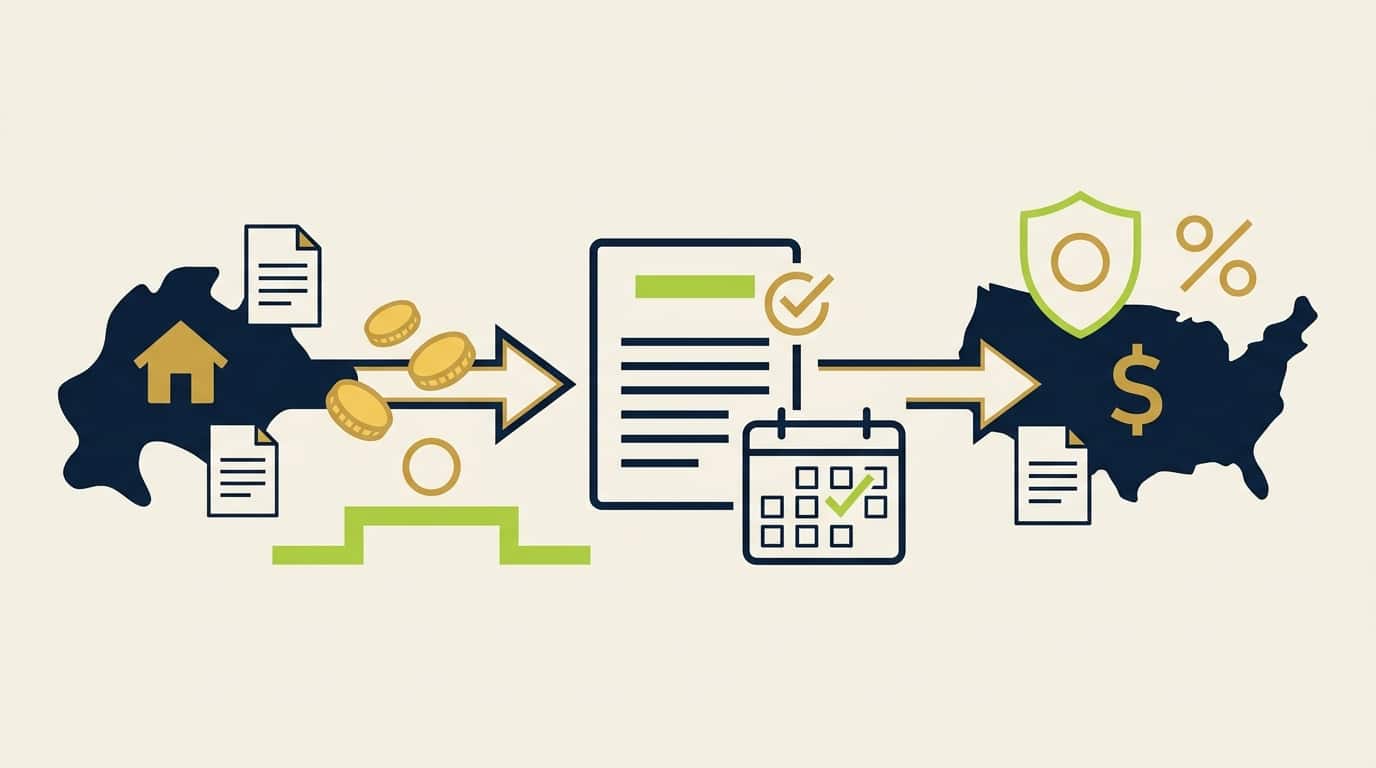
How W9, W8-BEN, W8-BEN-E, and FATCA Form 8938 Work Together
These four forms are interconnected parts of a single global information-sharing system designed to give the IRS visibility into assets held by U.S. persons worldwide. Here is how they interact in practice:
- You open an account at an Israeli bank. The bank asks you to sign either a W-9 (if you are a U.S. person) or a W-8BEN (if you are not).
- The bank transmits data on your account to the Israeli Tax Authority under the FATCA IGA, which forwards it to the IRS.
- You file Form 8938 with your annual tax return if your foreign financial assets exceed the applicable threshold.
- You separately file the FBAR (FinCEN 114) if your foreign account balances exceeded $10,000 at any point during the year.
- If you own or control a foreign company, the W-8BEN-E classifies that entity, potentially triggering disclosure of U.S. shareholders.
The solution to this complex web of obligations is straightforward: proactive, complete disclosure. Declare all balances through the FBAR and Form 8938, ensure your bank forms accurately reflect your U.S. status, and maintain consistent reporting year over year.
—
Deadlines, Penalties, and Common Compliance Errors
| Form | Filed With | Deadline | Penalty for Non-Filing |
|---|---|---|---|
| Form 8938 (FATCA) | IRS (attached to 1040) | April 15 (extendable to Oct 15) | $10,000–$50,000 per year |
| FBAR (FinCEN 114) | FinCEN | April 15 (auto-extended to Oct 15) | Up to $10,000 (non-willful); $100,000+ (willful) |
| W-9 | Financial institution | Upon request | 28% backup withholding |
| W-8BEN | Financial institution | Upon request | 30% withholding on U.S.-source income |
| W-8BEN-E | Financial institution | Upon request | 30% withholding on U.S.-source income |
Most common compliance errors include:
- Assuming that living in Israel exempts you from U.S. tax filings — it does not.
- Failing to report Israeli pension funds (Kupat Gemel, Keren Hishtalmut) on Form 8938.
- Signing a W-8BEN as a U.S. citizen, which is incorrect and can create legal exposure.
- Not reporting company ownership interests held outside a brokerage account.
- Missing the FBAR filing for jointly held accounts or accounts with signatory authority only.
If you are unsure about your obligations under the U.S.-Israel tax treaty or need help navigating FATCA compliance, our specialists are here to help.
—
How Tax4US Can Help
Tax4US provides comprehensive assistance with all U.S. international tax reporting requirements for Americans living in Israel and worldwide. Our services include:
- Form 8938 preparation and filing as part of your annual U.S. tax return.
- FBAR filing via the FinCEN online system.
- W-9, W-8BEN, and W-8BEN-E form completion — provided at no additional cost to clients submitting their annual return.
- FATCA compliance reviews for individuals and business owners.
- Entity classification analysis under W-8BEN-E, including Passive NFFE and PFIC evaluations.
The global exchange of financial information between governments is no longer a future concern — it is a present reality. Israeli banks have been reporting U.S. account holder data since 2016. The question is not whether the IRS can find your accounts, but whether your filings are complete and accurate when they do.
Contact our team today for a consultation, or explore our full range of U.S. tax services for Israelis and Americans abroad.
—
Sources: IRS.gov — FATCA Information for Individuals | FinCEN — FBAR Filing Requirements | SSA.gov — International Programs