
Foreign-Owned Single-Member LLC: What Every Non-US Owner Must Know About the IRS Reporting Surprise
If you own a foreign-owned single-member LLC in the US, the Obama administration left a regulatory surprise that continues to affect thousands of non-American LLC owners today. Starting with fiscal year 2017, the IRS dramatically expanded its reporting requirements to capture foreign-owned single-member LLCs — entities that were previously invisible to US tax authorities. If you own an LLC in the United States and you are not a US citizen or resident, this article explains exactly what changed, who is affected, what you must file, and what the consequences are if you don’t comply.
—
What Changed: The New IRS Rule for Every Foreign-Owned Single-Member LLC

Before 2017, a foreign-owned single-member LLC (SMLLC) was treated as a “disregarded entity” for US tax purposes. This meant it was essentially transparent — it filed no US tax return, had no EIN requirement, and reported nothing to the IRS. Foreign nationals used this structure legally, but also conveniently, to conduct business in the US while remaining largely invisible to the tax system.
That changed dramatically when the US Department of Treasury and the IRS issued final regulations expanding IRC Section 6038A to include disregarded entities not classified as US corporations. Effective for tax years beginning January 1, 2017, a foreign-owned single-member LLC is now treated as a domestic corporation solely for the purposes of these reporting requirements.
The practical result: foreign-owned SMLLCs must now comply with the same filing, bookkeeping, and reporting obligations that apply to 25% foreign-owned domestic corporations — including the requirement to file Form 5472. You can read the official IRS guidance on this rule directly at IRS.gov.
—
Why the Obama Administration Created This Rule
The answer lies in a decade-long push toward global financial transparency. Since the introduction of FATCA (Foreign Account Tax Compliance Act) in 2010, the US has aggressively pursued tax evaders and unreported offshore assets. FATCA forced foreign banks worldwide to report on US account holders or face severe penalties — and it worked.
However, critics — including foreign governments — pointed out a glaring double standard: while the US demanded transparency from other countries, it was simultaneously offering foreign nationals a convenient shelter through anonymous LLC ownership. States like Delaware, Wyoming, and Nevada became notorious for allowing LLCs to be formed with minimal ownership disclosure.
The 2017 rule was one of several coordinated steps to close this gap, including:
- FinCEN Geographic Targeting Orders (GTOs): Requiring title companies to identify beneficial owners of shell companies in cash real estate deals in Miami, Manhattan, and other cities.
- Beneficial Ownership Reporting: Laying the groundwork for what became the Corporate Transparency Act (CTA) and FinCEN’s Beneficial Ownership Information (BOI) requirements. See FinCEN.gov for current BOI filing requirements.
- Expanded FATCA enforcement: Increasing information exchange treaties with countries worldwide.
For more on how international information sharing affects Israeli-American taxpayers, see our guide on the US-Israel Tax Treaty.
—
Who Is Affected by the Foreign-Owned Single-Member LLC Rules?
Not every LLC owner needs to worry about these requirements. The key trigger is sole foreign ownership combined with disregarded entity status. If you are a non-US person and you are the only member of your LLC, you are almost certainly affected. The table below gives a clear breakdown:
| Scenario | Affected by Form 5472 Rule? |
|---|---|
| US citizen or resident as sole member of an LLC | ❌ No |
| Non-US individual as sole member of an LLC | ✅ Yes |
| Non-US corporation as sole member of an LLC | ✅ Yes |
| Multi-member LLC with any US members | ❌ Generally No (different rules apply) |
| Non-US trust as sole member of an LLC | ✅ Yes |
| LLC with 25%+ foreign ownership operating as a corporation | ✅ Yes (existing rule) |
Common profiles of affected individuals include:
- Israeli entrepreneurs running e-commerce or tech businesses through a US LLC
- Foreign investors holding US real estate inside an LLC
- Non-US freelancers using an LLC to receive US-source income
- Foreign holding companies using an LLC as a US subsidiary or operating vehicle
If you fall into any of these categories and have not yet addressed your compliance obligations, keep reading — the penalties for inaction are severe.
—
What a Foreign-Owned Single-Member LLC Must File
If you own a foreign-owned single-member LLC, your compliance obligations include four core requirements:
1. Obtain an Employer Identification Number (EIN)
Every foreign-owned SMLLC must obtain an EIN from the IRS, even if it has no employees and no US tax liability. This is the foundational step — without an EIN, you cannot file Form 5472. As a foreign entity, obtaining an EIN can take several weeks, so this should be done early.
2. Maintain Adequate Books and Records
The regulations require you to maintain permanent books of account or records sufficient to establish the correctness of your federal income tax return — or in this case, your Form 5472 filing. Records must be kept in the US or made available to the IRS upon request. Poor recordkeeping is itself a compliance risk.
3. File Form 5472 Attached to a Pro Forma Form 1120
This is the most important step. A foreign-owned SMLLC must file Form 5472 attached to a pro forma Form 1120 (a US corporation return used solely as a transmittal document for the 5472). This filing is required even if:
- The LLC had zero income during the year
- The LLC conducted no actual business operations
- No other US tax return is otherwise required
The form discloses the identity of the foreign owner and details reportable transactions between the LLC and its foreign owner — including loans, contributions, distributions, rents, and sales of property.
4. Meet the Filing Deadline
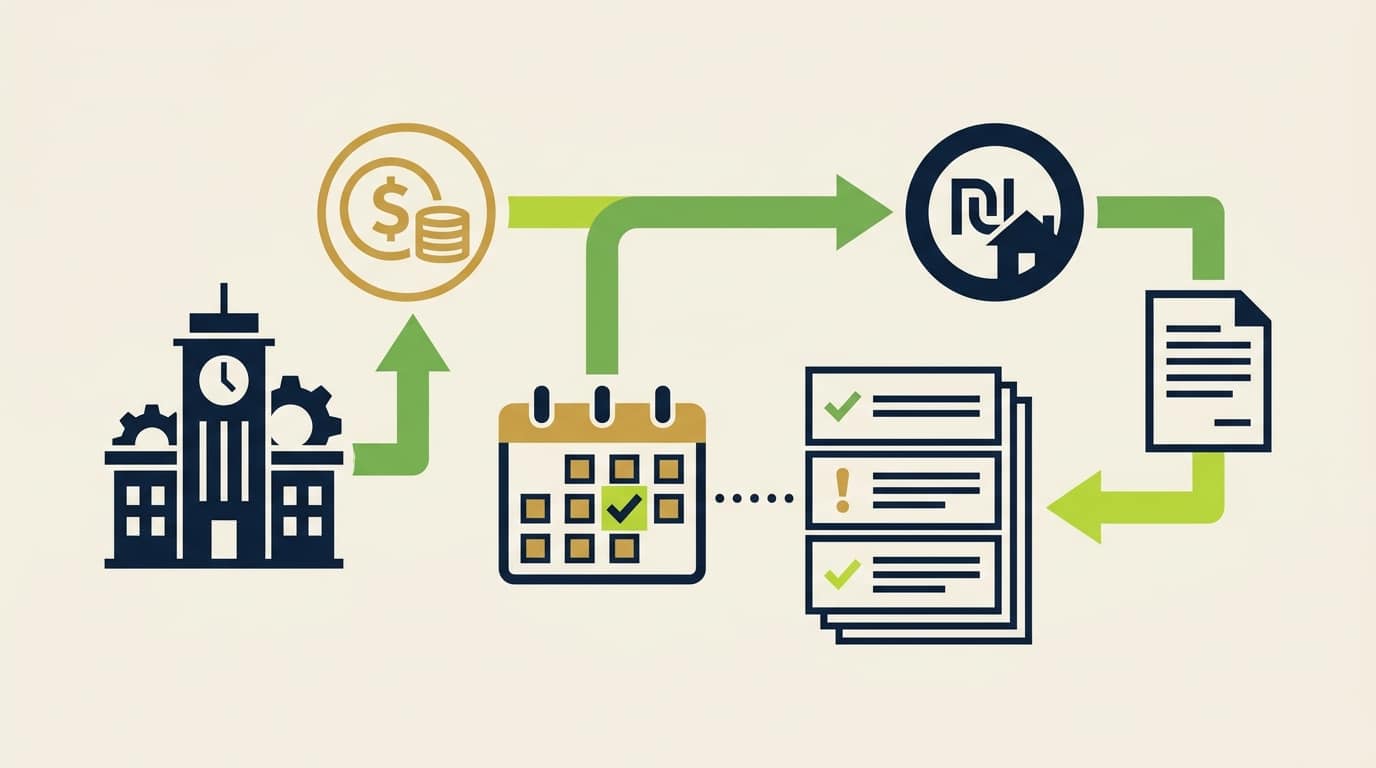
The pro forma 1120/5472 is due by April 15 of the year following the tax year (or April 18 in some years when April 15 falls on a weekend or holiday). An extension to October 15 can be requested by filing Form 7004. Late or missing filings trigger automatic penalties — see the next section.
For a broader look at your US tax filing obligations as a foreign person with US activities, explore our services page.
—
Reportable Transactions: What Must Be Disclosed
Form 5472 captures reportable transactions between the LLC and any related foreign party — the 25%+ foreign owner or another related foreign person. One of the most common surprises for new filers: even a routine capital contribution from the owner to the LLC is a reportable transaction.
| Transaction Type | Examples |
|---|---|
| Sales and purchases of property | Selling assets to the owner; buying assets from the owner |
| Rents and royalties | Owner charges LLC rent; LLC pays owner licensing fees |
| Loans and interest | Owner lends money to LLC; LLC loans money to owner |
| Compensation | Payments made to or from the foreign owner for services |
| Capital contributions | Owner injects cash or property into the LLC |
| Distributions | LLC distributes profits or property to the owner |
| Any other amount paid or received | Catch-all for transactions not otherwise listed |
Many foreign owners report their operating transactions correctly but overlook the fact that their initial capital injection — the money they put in to open the LLC’s bank account — is itself reportable. This is one of the most frequent errors we see in practice.
—
Penalties for Non-Compliance: Why This Cannot Be Ignored
The IRS treats Form 5472 non-compliance as a serious matter. The penalties are among the steepest in the US tax code for information reporting:
- $25,000 per LLC, per year for failure to file Form 5472 or for filing an incomplete or incorrect form
- An additional $25,000 for each 90-day period the failure continues after IRS notification
- Potential criminal penalties in cases of willful non-compliance
These penalties apply even when the LLC owes zero tax. The IRS has assessed $25,000 penalties on foreign-owned LLCs that simply forgot to file — or did not know they had to. Enforcement has increased significantly since 2018, and the IRS has cross-referencing tools to identify foreign-owned entities that have not filed.
If you have missed filings from prior years, you may be eligible for IRS voluntary compliance programs that allow you to come into compliance with reduced or waived penalties. Our team can help you evaluate your options — contact us here.
—
How This Connects to FBAR, FATCA, and Other Cross-Border Obligations
For Israeli residents and dual US-Israeli citizens who own a US LLC, the compliance picture is often broader than just Form 5472. A foreign-owned single-member LLC frequently intersects with several other reporting regimes:
- FBAR (FinCEN Form 114): If you have foreign financial accounts exceeding $10,000 in aggregate value at any point during the year, you must file an FBAR with FinCEN. Learn more in our comprehensive FBAR guide.
- FATCA Form 8938: If your foreign financial assets exceed reporting thresholds ($50,000 for single filers living in the US; higher thresholds for those abroad), Form 8938 must be attached to your US tax return. See our FATCA reporting guide for full details.
- Foreign Tax Credits: If you pay Israeli tax on income that is also subject to US tax, you may be able to claim a foreign tax credit to reduce or eliminate double taxation.
Understanding how all these obligations interact is critical. Failing to plan holistically can result in both over-payment and unexpected penalties at the same time.
—
Worked Example: An Israeli Entrepreneur’s Situation
Consider Avi, an Israeli resident who formed a Wyoming single-member LLC in 2020 to sell products on Amazon US. He contributed $15,000 as initial capital and has earned approximately $40,000 per year in net sales revenue, which he transfers to his Israeli bank account periodically.
Here is what Avi is required to do each year:
- File Form 5472 (attached to a pro forma Form 1120) reporting the $15,000 capital contribution (Year 1) and all annual distributions to himself as reportable transactions.
- Report his Israeli bank account on an FBAR if the aggregate balance exceeds $10,000 at any point during the year.
- Evaluate FATCA Form 8938 obligations based on his total foreign financial asset value.
- Consider the US-Israel Tax Treaty to determine how his Amazon income is characterized and taxed in each country.
If Avi has been operating since 2020 without filing Form 5472, he potentially faces $25,000 × 5 years = $125,000 in penalties, before any continuation penalties. Early voluntary action dramatically reduces this exposure.
—
Common Mistakes Foreign LLC Owners Make
Based on advising Israeli and other foreign nationals with US LLCs, these are the most frequent errors:
- Assuming “no income = no filing”: Wrong. The 5472 is required regardless of whether the LLC earned any money during the year.
- Forgetting to obtain an EIN: The LLC cannot file without one, and obtaining an EIN as a foreign entity can take weeks through the mail-in process.
- Not reporting capital contributions: Many owners report operating transactions but miss the fact that their initial or subsequent capital injections are reportable.
- Filing Form 5472 without the pro forma 1120: This is considered an incomplete filing and can trigger the full $25,000 penalty as if nothing were filed.
- Ignoring prior years: The rule has been in effect since 2017. If you have owned a foreign-owned single-member LLC since then and never filed, you may have multiple years of exposure accumulating right now.
—
What You Should Do Now
If you are a foreign-owned single-member LLC owner who has not yet addressed these obligations, the time to act is now — not when the IRS sends you a notice. Here is a practical action plan:
- Confirm your LLC’s classification: Is it a single-member LLC treated as a disregarded entity? If yes, these rules apply to you.
- Obtain an EIN if you do not already have one — start this process immediately given processing times.
- Gather records of all transactions between yourself and the LLC for each open tax year (generally 2017 to present).
- Prepare and file Form 5472 with a pro forma Form 1120 for each applicable year. If you have missed years, a voluntary disclosure approach may significantly reduce your penalty exposure.
- Consult a US tax professional who specializes in cross-border taxation. The intersection of foreign ownership, disregarded entity rules, treaty provisions, and information reporting is genuinely complex.
Our team at Tax4US specializes in exactly these scenarios — helping Israeli residents and other foreign nationals meet their US tax obligations efficiently, accurately, and with minimal penalty exposure. Reach out to us today to discuss your specific situation.
—
For official IRS guidance on Form 5472 and foreign-owned disregarded entities, visit IRS.gov. For information on beneficial ownership reporting requirements under the Corporate Transparency Act, visit FinCEN.gov.